Digital Marketing
Profile Creation Sites (2026) — Curated High-DA List and the Right Way to Build Profile Backlinks
The agency handed over a spreadsheet with 900 links in it. The client — a founder of a growing D2C skincare brand — felt reassured for exactly one week, until she looked closer.
Half the profiles were blank shells: her brand name dropped into a random forum, no bio, no logo, no context. A third of the sites didn’t even load. When she checked whether Google had indexed any of them, most returned nothing. She’d paid for volume and received noise.
That story is why so many people search for profile creation sites and come away confused. The internet is full of posts promising “9000+ profile creation sites” and “instant high-DA backlinks,” but almost none of them explain the part that actually matters: which profiles are worth your time, and how to build them so they help instead of sitting dead.
This guide fixes that. We’ll give you a real, curated profile creation sites list — organized by category, using platforms that genuinely carry weight in 2026 — and, more importantly, the method that turns those profiles into brand, entity, and search signals. We’ll be straight with you about dofollow profile creation sites versus nofollow, about what these links can and can’t do, and about how AI search has quietly raised the value of getting your brand recognized across the web.
Six of us wrote this — an off-page lead, a technical SEO, a brand strategist, a link-building practitioner, an AI search strategist, and a consultant. Each covers the part we know best. By the end, you’ll understand why fifty strong profile backlink sites beat nine hundred empty ones every single time — and exactly how to build the fifty that count.
What Are Profile Creation Sites?
Table of Contents
Let me start simple, because the term gets overcomplicated.
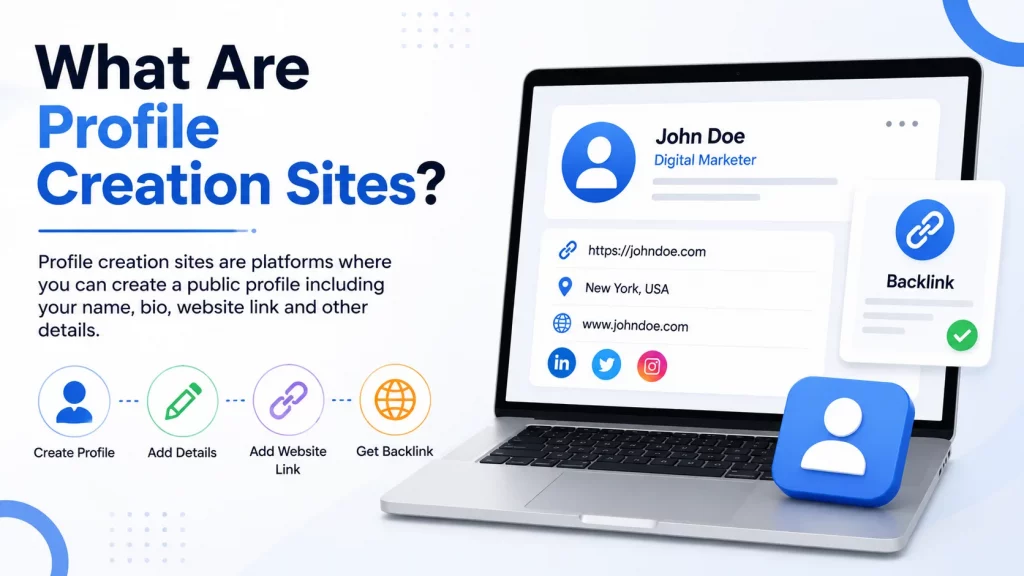
Profile creation sites — also called profile linking sites or profile submission sites — are platforms where you create a public profile for your brand or yourself and include your website URL, business name, bio, and logo. The link you get back is a profile backlink. Think of it as planting your brand’s flag on trusted corners of the internet.
You already use several without thinking of them this way. LinkedIn, GitHub, Medium, Behance, Crunchbase, Quora, Reddit, Pinterest — all let you build a profile and add your website. When you fill one out properly, you’ve created a web 2.0 profile that both people and search engines can find.
Here’s what makes them appealing as an off-page SEO tactic. They’re free, they don’t require pitching anyone or writing a guest article, and they come from platforms with real domain authority. You sign up, complete your profile, add your link, and you’ve added diversity to your backlink profile with almost no cost.
But — and my colleagues will go deep on this — a profile creation site is only useful when the profile is real. A blank shell with just a URL does close to nothing. A complete profile, with logo, bio, portfolio, and consistent business details, builds genuine brand signals and entity recognition. That difference is the entire subject of this article.
One more framing that helps. These aren’t only SEO assets; they’re active parts of your online presence. A well-built profile on the right platform sends referral traffic, builds credibility, and shows up when someone searches your brand. If you want to understand how this fits into a full strategy rather than as an isolated trick, that’s exactly the kind of foundation a hands-on program like the digital marketing coaching at Digitally Code is built to teach.
Do Profile Backlinks Still Work in 2026? Dofollow vs Nofollow
The question I get most is blunt: “do profile backlinks work in 2026, or is this outdated?” The honest answer: yes, when done right — but not for the reason most people think.
Let’s clear up the biggest confusion first: dofollow vs nofollow profile links. A dofollow link passes what SEOs call link equity — it directly tells Google to count that link as a vote for your site. A nofollow link technically doesn’t pass that equity. Many people see “nofollow” and assume the profile is worthless. That’s a mistake.
Here’s why. Even nofollow profile links deliver real value: brand signals, entity recognition, referral traffic, and a more natural, diverse backlink profile. Google’s systems want to see that a real brand exists consistently across trusted platforms. A mix of dofollow and nofollow actually looks more natural than an all-dofollow profile, which can look manufactured.
So which dofollow profile creation sites genuinely pass equity? Fewer than the big lists claim. The mistake I watch people make is trusting a “dofollow” label in a blog table. Link attributes change, and platforms often switch links to nofollow or UGC. The only reliable method is to check the live profile HTML yourself — inspect the link and confirm its actual attribute before you count it as a true dofollow backlink. If you want to know how to check dofollow profile links, that live inspection is the answer, not a spreadsheet’s promise.
On domain authority and page authority: these are third-party trust scores, not Google metrics, but they’re a useful shorthand. A link from a da 90 platform like GitHub carries far more weight than one from an obscure directory. Some SEO analyses even suggest sites with a strong share of high-DA backlinks tend to rank better — though treat any single stat like that as directional, not gospel.
The real takeaway: profile links work in 2026 as a brand and entity strategy first, an SEO tactic second. Judge a profile creation site by whether it’s high-authority, indexed, and publicly visible — not by a dofollow label alone.
The Real Value — Brand, Entity, and E-E-A-T Signals
Let me reframe this away from links entirely, because that’s where the real 2026 value sits.
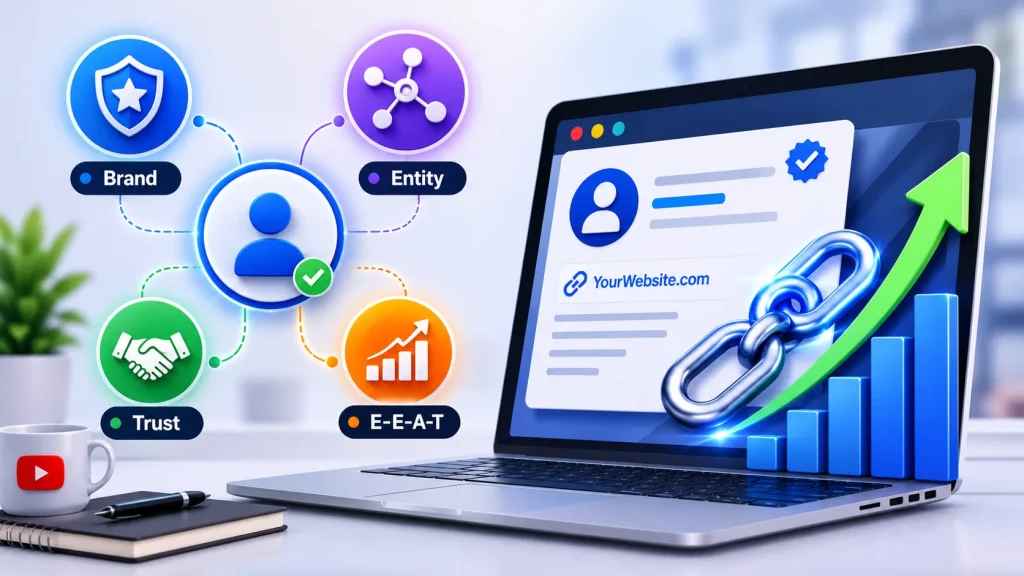
Google no longer just ranks pages. It tries to understand entities — real brands, people, and organizations — and how trustworthy they are. This is the heart of E-E-A-T (Experience, Expertise, Authoritativeness, Trustworthiness). And here’s the connection people miss: when your brand appears, consistently, across reputable platforms like LinkedIn, Crunchbase, GitHub, and Behance, you’re feeding Google’s entity recognition. You’re proving you’re a real, established organization.
That’s why NAP consistency — the same Name, Address, and Phone number across every profile — matters so much. Inconsistent details confuse both users and search engines. Consistent details build a coherent picture of who you are. In my experience, this quiet consistency does more for a young brand than a dozen aggressive link tactics.
For local businesses, this compounds. Local business profile creation sites and local citations — a properly filled Google Business Profile, plus regional directories — directly support local SEO. When someone searches your service in your city, those consistent citations help you show up. If you serve a specific market, building local profile creation sites with matching details is one of the highest-return things you can do.
There’s a branding payoff too, separate from rankings. Every complete profile is a digital business card. When a potential customer researches you, finding a polished presence across trusted platforms builds trust before they ever reach your site. That’s reputation, not just SEO.
This is exactly the kind of foundational off-page work a professional digital marketing company builds deliberately — brand-consistent profiles, citations, and entity signals as a system, not a scattered checklist. And if you want to gauge what credible, experienced execution looks like, the team at Digitally Code is a useful reference point for the standards behind this work.
How to Use Profile Creation Sites the Right Way (+ Best Sites)
Here’s the method I use, refined over hundreds of campaigns. Follow this and your profiles will actually count.
Choose quality platforms first. Start with high-DA, indexed sites that have real traffic. Skip anything with a high spam score, broken pages, or no Google presence — check with site:domain.com to confirm a site is even indexed. Avoid the temptation of “9000+ free profile creation sites” dumps; most are dead weight.
Complete every field. This is the single biggest lever. Add your logo, cover image, a real bio, your services, social links, and your website URL. A fully built profile ranks better inside the platform and gets indexed faster. A blank one does nothing.
Keep NAP and branding consistent. Same business name, same URL, same details everywhere. Vary your bio slightly every 10–15 profiles so it’s not identical copy-paste, but keep the core facts identical.
Mix your anchor text naturally. Use your naked URL, your brand name, and a branded variation like “YourBrand – Official Site.” Never stuff keywords like “best SEO expert in Delhi” repeatedly — that’s a red flag.
Go slow. Build 5–15 profiles per week, not hundreds overnight. Natural growth looks natural; a sudden flood looks like spam. Quality over quantity is the whole game — fifty complete profiles beat five hundred empty ones.
Verify and index. Confirm each profile is publicly viewable, check the live link attribute, then help it get found by submitting through Google Search Console or pinging via IndexNow. An unindexed profile link does nothing for you.
Now, a curated high da pa profile creation sites list worth starting with, by category. (DA figures are third-party estimates — verify current values and link attributes yourself.)
- Professional & business: LinkedIn, Crunchbase, About.me, Gravatar, AngelList/Wellfound, F6S
- Developer & tech: GitHub (DA ~96), GitLab, Stack Overflow, Product Hunt, Dev.to, Kaggle
- Creator & portfolio: Behance, Dribbble, Flickr, Vimeo, SoundCloud, 500px
- Publishing & web 2.0: Medium, WordPress.com, Blogger, Substack, Tumblr
- Social & community: Pinterest, Reddit, Quora, Mix, Minds, Disqus, Linktree
- Local & directory (India + global): Google Business Profile, Justdial, Sulekha, IndiaMART, Yelp, Yellow Pages
Start with 30–50 of these, build them properly, then expand into niche profile creation sites relevant to your industry. For startup profile creation sites, prioritise Crunchbase, Product Hunt, and Wellfound. For developer profile creation sites, GitHub and Stack Overflow. Match the platform to who you are.
Building all this manually takes weeks, which is why many brands hand off distribution and profile management. When social profiles are part of the plan, disciplined social media management keeps them active and consistent — which is what makes them count over time.
AI Search, GEO/AEO, and Entity Recognition
Here’s the shift that makes profile creation more relevant in 2026, not less — and the angle almost no profile creation sites list post covers.
More people now ask ChatGPT, Perplexity, Gemini, or read Google’s AI Overviews instead of scrolling ten blue links. These systems don’t just match keywords; they decide which brands and sources to trust and cite. And how do they build that trust? Partly by seeing a brand referenced consistently across the credible web — exactly what a strong set of profiles creates.
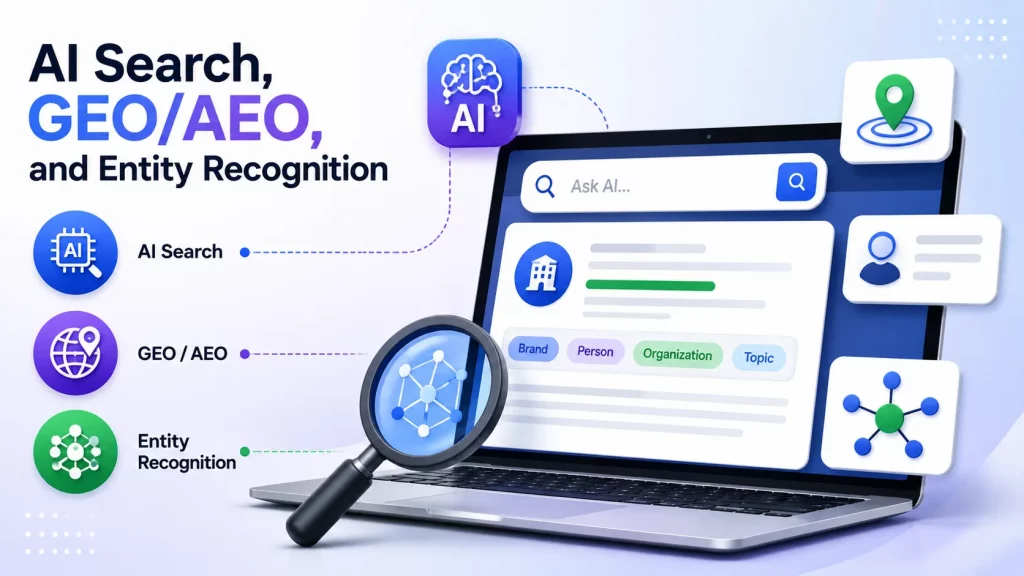
This is where generative engine optimization (GEO) and answer engine optimization (AEO) connect to something as old-school as profile creation. When your brand has complete, consistent profiles on GitHub, LinkedIn, Crunchbase, and Medium, you’re building the digital footprint for ai search that these models read as legitimacy. You’re strengthening the entity signals that feed a Google Knowledge Panel and that help AI answer “who is this brand?” correctly.
So the question “how ai search finds brands” has a practical answer: it looks for a coherent, well-referenced entity across trusted platforms. Profiles are one of the cleanest ways to build that. Strong, consistent brand mentions for ai overviews and entity seo for chatgpt and perplexity improve your odds of being the brand an AI recommends — and of earning an llm citation when someone asks about your space.
The contrast with the old spam mindset is sharp. Nine hundred blank profiles do nothing for ai brand visibility — they may even signal low quality. Fifty complete, consistent, high-authority profiles build the kind of entity clarity that both Google and AI reward. The brands winning gemini brand recognition and AI citations right now are the ones treating their web presence as a coherent identity, not a link dump.
The lesson is the same one running through this whole article: quality and consistency win. That instinct is exactly what AI search rewards.
Building It Into a Real Off-Page System
Let me tie this together, because profile creation only pays off as one part of a system — never as a standalone trick.
Picture your off-page presence as layers that reinforce each other. Profile creation sites and local citations establish your entity and brand consistency — the foundation. Content and on-page SEO give search engines something worth ranking. Digital PR and editorial links earn the high-authority mentions that carry the most weight. And social distribution keeps it all active and drives real traffic. Profiles sit at the base of that stack: not the flashiest layer, but the one that proves you’re real.
When someone asks me how many profile backlinks do i need, my answer mirrors the whole piece: fewer than you think, better than you have. Fifty strong, complete profiles on trusted platforms will do more than a thousand empty ones — for rankings, for brand, and for AI visibility.
And when profile creation is compared with directory submission or other off-page tactics, the honest view is that they complement each other. You want a natural mix: profiles, citations, editorial links, and brand mentions. Over-relying on any single tactic — including this one — is where people go wrong.
If your goal is faster growth alongside the slow-burn of organic authority, paid channels can accelerate the early traction. A well-run Google Ads program or full-funnel Meta Ads campaign brings immediate visibility while your entity signals compound in the background. The two work best together.
If you’d rather learn to run all of this yourself than outsource it forever, that’s the point of proper training. You can see how the pieces connect on the Digitally Code homepage, then judge every off-page tactic — profile creation included — by one test: does it build a real, consistent brand, or just noise?
Frequently Asked Questions
What are profile creation sites in SEO?
Profile creation sites are platforms where you create a public profile for your brand or yourself, adding your website URL, business name, bio, and logo. The link you get is called a profile backlink. They’re an off-page SEO technique used to diversify your backlink profile, build brand and entity signals, support local citations, and improve your online presence. Common examples include LinkedIn, GitHub, Crunchbase, Behance, and Medium. Done well, they strengthen how search engines and AI understand your brand.
Do profile creation sites still work for SEO in 2026?
Yes, when done correctly — but as a brand and entity strategy first, not a ranking shortcut. Complete profiles on high-authority, indexed platforms build brand signals, entity recognition, E-E-A-T, and a natural backlink profile. The old approach of mass-creating hundreds of blank profiles doesn’t work and can look spammy. The rule in 2026 is quality over quantity: fifty complete profiles on trusted sites beat five hundred empty ones.
Are profile backlinks dofollow or nofollow?
It’s a mix. Some profile links are dofollow (they pass link equity and directly help rankings), while many are nofollow or UGC (they don’t pass equity officially but still provide brand signals, entity recognition, and referral traffic). Both types are valuable, and a natural profile has a mix of both. Never trust a “dofollow” label in a list — always inspect the live profile HTML to confirm the actual link attribute before counting it.
How many profile creation sites should I use?
Focus on quality, not a big number. Start with 30–50 high-DA, indexed platforms, build complete profiles on each, and expand into niche-specific sites relevant to your industry afterward. Create 5–15 per week so growth looks natural rather than spammy. Fifty well-built profiles deliver far more value than hundreds of half-filled ones. The goal is a consistent, credible presence — not the largest possible list.
How do I create profile backlinks the right way?
Choose high-authority, indexed sites; complete every field (logo, bio, services, social links, website URL); keep your NAP and branding consistent everywhere; vary your bio slightly and mix your anchor text naturally; avoid keyword stuffing; build gradually; then verify each profile is public and help it get indexed via Search Console or IndexNow. A complete, consistent, indexed profile is what actually helps — a blank URL drop does nothing.
Which are the best high-DA profile creation sites?
Strong starting platforms include GitHub, LinkedIn, Crunchbase, About.me, Behance, Dribbble, Medium, WordPress.com, Product Hunt, Quora, Reddit, Pinterest, and Gravatar, plus Google Business Profile and regional directories for local SEO. GitHub is among the highest-authority options. The best sites for you also depend on your niche — startups should prioritise Crunchbase and Product Hunt, developers GitHub and Stack Overflow, creatives Behance and Dribbble. Match platforms to your identity.
Is profile creation white-hat or black-hat SEO?
Profile creation is a white-hat off-page SEO technique when done properly — building complete, genuine profiles on reputable platforms with consistent information. It crosses into risky territory only when abused: mass-creating blank profiles on spammy or deindexed sites, stuffing keywords, or dumping hundreds of links overnight. Stick to quality platforms, complete profiles, and gradual, consistent building, and it stays firmly white-hat and safe for long-term SEO.
How do profile creation sites help with AI search visibility?
AI systems like ChatGPT, Perplexity, Gemini, and Google AI Overviews decide which brands to trust and cite partly by how consistently a brand appears across the credible web. Complete, consistent profiles on trusted platforms strengthen your entity signals — helping AI correctly understand and recommend your brand. This supports a Knowledge Panel and improves your chances of being cited in AI answers. Blank or spammy profiles do the opposite, so quality and consistency matter more than ever.
The Honest Bottom Line
Remember the skincare founder with 900 useless links? She deleted the spreadsheet and started over — this time building forty complete profiles on platforms that mattered: Crunchbase, LinkedIn, Behance, Product Hunt, a proper Google Business Profile, and a handful of niche beauty directories. Same logo, same bio, same URL everywhere. Within a couple of months, her brand started showing a clean Knowledge Panel, and her name began surfacing in AI answers about clean skincare.
That’s the truth about profile creation sites in 2026: they’re not a magic backlink machine, but as a quality-first brand and entity strategy, they quietly build authority that lasts. Skip the “9000+ sites” dumps. Build fifty real ones, keep them consistent, and integrate them into a broader off-page plan. If you want to learn to do this properly — or have experienced hands build it for you — start by exploring a practical digital marketing program. Build the presence. Skip the noise.


Recommend The Best Learning Path Tailored To Your Needs
Discuss your career goal with experienced trainers for clarity.

